


Keep the source beside the fact.
Atlas records bring public documents together. Start with the source for the field you need, check its date and scope, and keep unknown details unknown.

Start with the record.
A record can describe a site, a shared campus or a proposal. A current service page, an approval and a future opening target establish different things. Read the evidence and any corrections before repeating a claim.
Keep the map limits.
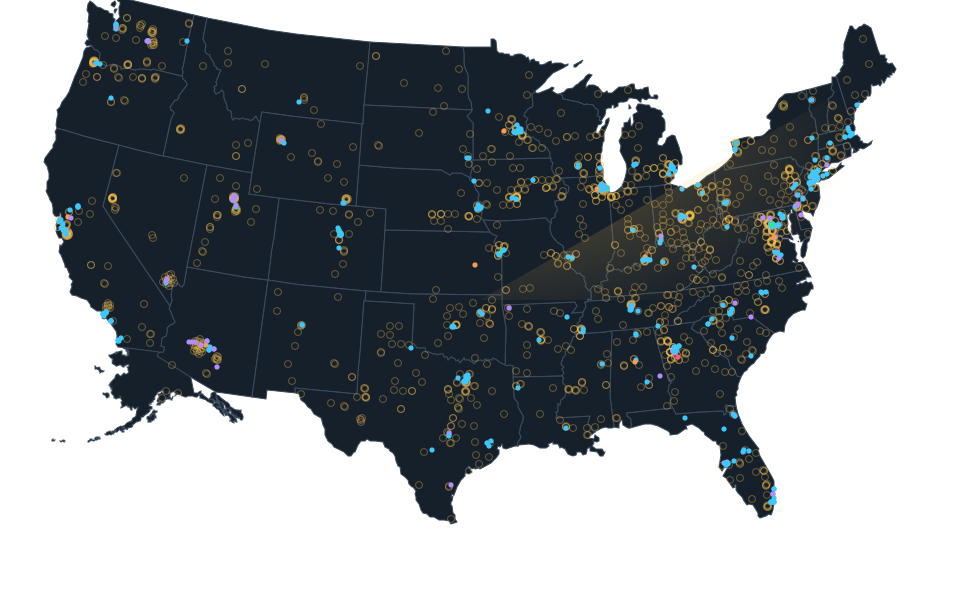
Published address references and approximate areas are labeled separately. County context is not a parcel. A record without a supported point remains searchable, with no guessed destination.
Cite a page.
Open Cite this page in the footer, then choose Copy citation. The citation includes the title, canonical URL and compilation date. Keep the original source and its date beside any specific finding. A compilation date does not certify current operation.
Embed a map.
Choose Embed this map on a state, county or company page, or Embed this chart on the concerns page. Copy the complete code, including the Data Centers Atlas caption link outside the frame. The embedded view stays connected to the published atlas.
Request a correction.
Use the existing Shaun Wilson Designs contact with the page URL, the record name and a supporting public source. The public tip form is not available.
Download with context.
Data downloadsCoverage and evidenceResearch methods

Credits and reuse.
The license for Atlas's original compilation is awaiting the owner's decision. No new reuse license is granted here. Existing source credits and separate input licenses remain in the methods and downloads.
Understand the equipment.
Inside a data center explains cooling, power and other equipment with labeled illustrations. For a real place, use its own record and sources.
Updated . What changed: Dated page documentation. Individual source dates remain with the evidence.